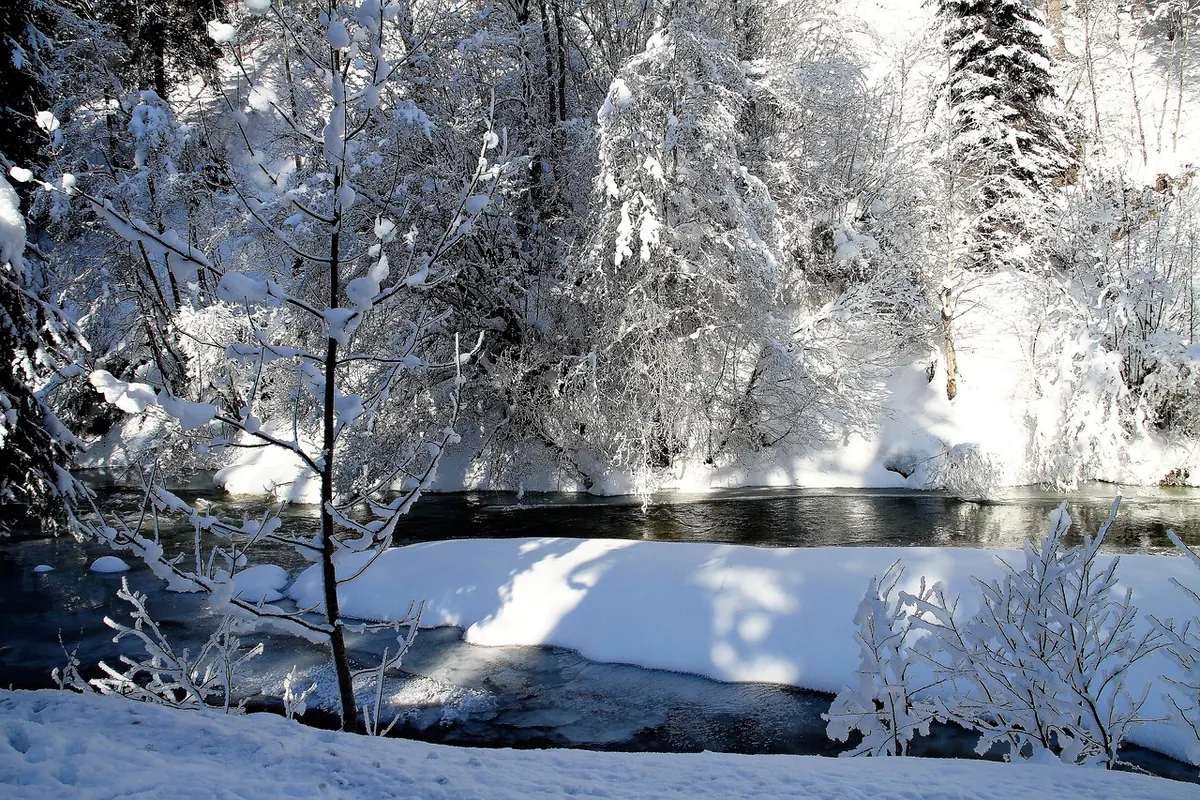
By February the river has two personalities. Where it runs open it is loud and dark and moving fast enough to carry a log. Where it has locked up it goes quiet and pale and, from the bank, looks like a path. That illusion is the thing worth naming early, because it is what turns a pleasant afternoon walk into a rescue call. Winter along a river is one of the finest places to be — low light, clean air, herons standing in the shallows like they own the place. It is also ground that can fail under you, water that can take your strength in minutes, and banks that bruise more easily than they look. A bit of preparation buys a lot of freedom.
Reading Ice You Did Not Watch Freeze
Ice forms unevenly, and the unevenness is usually invisible from shore. Current, channel depth, springs, sun exposure and snow cover all change how thick and how strong a given patch is. Snow is insulation: a foot of it can hide open water or a skin of ice that never thickened. Springs and groundwater seeps often stay open all winter, and the edges near the bank — shallow, sun-warmed, moving — are frequently the weakest part of the whole surface.
Colour tells you something, not everything. Clear ice with a blue-black or greenish cast tends to be the strongest. White, opaque, slushy ice usually formed fast with air and water trapped inside, and it is weaker. Grey patches, dark seams, wet-looking spots and reed stems poking through all signal thin or rotting ice. If you hear a deep boom and the surface flexes, that is a warning, not a green light.
The working rule is simple: no ice is safe ice unless you know its history. A pond you watched freeze through a cold snap is a different proposition from a river you met this morning. If you cannot vouch for it, stay off it, and keep the dog off it too. Dogs go through, people follow, and that is how a walk becomes an emergency.
If the Ice Breaks Under You
The first minute is the dangerous one. Cold water triggers an involuntary gasp and fast, panicked breathing; that reflex, not the temperature, drowns most people. Fight it by breathing out slowly and deliberately, keeping your head clear of the water, and telling yourself you have more time than it feels like.
- Do not swim for the far bank or under the ice. Turn back toward where you came from — that ice held you a moment ago.
- Get your forearms flat on the surface, kick your legs to bring your body horizontal, and slide forward rather than pushing down to climb.
- Roll or crawl away from the hole. Do not stand up and walk until you are well back from the break.
- Get out of the wind, strip wet layers, and pull on something dry. A spare hat, gloves and socks in a dry bag are worth their weight here.
- If you cannot get out, keep your arms on the ice, stay as still as you can, and shout or use a whistle. Conserve energy for the people coming.
Reading the Cold in Your Own Body
Hypothermia is not a sudden event. It arrives in stages, and the middle stage is the one that catches people, because judgement goes before strength does.
- Early: shivering, cold pale hands, fumbling with zips and laces, a bit of slurring.
- Moderate: hard shivering, clumsiness, confusion, poor decisions. The person may insist they are fine and want to keep going.
- Severe: shivering stops, skin is very cold, the person is drowsy, unresponsive or barely rousable.
Get the person out of wind and wet, remove damp clothing, and wrap them in dry insulation, warming the core before the limbs. Handle them gently; do not rub cold limbs hard. No alcohol. Warm, sweet drinks only if they are fully alert and able to swallow. If they are confused, drowsy, or have stopped shivering, treat it as a medical emergency and call for help. This is general information rather than medical training — a recognised wilderness first aid course is the thing that actually prepares you, and local emergency services are the ones to follow.
Leave No Trace on a Frozen Bank
Winter ground is more fragile than it appears. Frost heaves soil, and grass, moss and lichen are dormant rather than dead — a boot print pressed into a bank in January can still be there in April. Compaction spreads: one set of tracks becomes the obvious line, and the obvious line becomes a worn path within a season.
Stay on established trails even when the edge is a shorter route. Do not step onto ice shelves or overhangs; they erode and they collapse. Skip the fire. A ring of stones and blackened earth on a riverbank lasts for years, and river corridors collect those scars, so bring a stove or wait until you are home. Pack out everything, including tea bags, orange peel and stray fishing line.
Do not break ice for entertainment. That ice shelters fish and other aquatic life through the lean months. Do not follow animal tracks out onto the open surface either — winter is a season of tight margins, and every panicked flight costs an animal calories it may not have. Keep dogs on a lead and out of the water. And in late winter and early spring, stay out of shallow gravel beds; those are spawning grounds, and a wading boot does real damage.
Looking Without Leaning
Most winter river viewing is better from a distance anyway. A pair of binoculars shows you more of the water than your feet ever will, and it keeps you on solid ground: rock, pavement, established trail, or a bridge. Bridges are the best cold-weather viewing platforms there are.
When you do walk the bank, stay back from the edge. Snow hides the lip of an undercut bank, and outside bends — where the current cuts hardest — are where those overhangs form. Watch for shelves of ice that jut over open water. If you go alone, tell someone your route and your expected return time, and keep your phone in an inside pocket where the cold will not flatten the battery. Start early enough to finish in daylight; ice reads differently at dusk, and winter dark arrives without much warning.
A Cold-Weather River Checklist
- Checked the forecast and, if available, the local river gauge before leaving.
- Someone at home knows the route and the return time.
- Layers, not cotton: wool or synthetic base, insulating midlayer, windproof shell, hat, gloves, spare gloves.
- Boots with real traction; traction aids if the trail ices up.
- Dry bag with spare hat, gloves and socks.
- Thermos and a high-energy snack.
- Phone, whistle, small headlamp.
- Throw rope and ice picks if you will be anywhere near frozen water.
- Binoculars, so you can watch from a safe distance.
- A plan for turning around early, decided before you start walking.
The Habit That Matters Most
Experienced winter walkers look dull from the outside. They take the long way around the ice. They turn back at the halfway point because the light is going. They never put weight on a surface they cannot vouch for, and they leave the bank looking as though nobody had been there. None of that makes a story. It does mean everyone gets home cold, clear-headed and ready to go again next weekend, which is the whole point of a walk by the river in winter.
Photo: 5598375 / Pixabay